



Super User
General information
Currently, PVU hold 3 undergraduate programs as:
- Geological Engineering / Petroleum Geophysics
- Petroleum Engineering / Petroleum Drilling and Production
- Chemical Engineering / Refining and Petrochemicals
1. Module details have been designed according to some following main academic orientations:
- Undergraduate studies are regulated by the Ministry of Education and Training. Fundamental and specialized subjects are designed not only to meet the quality requirement of high-ranking American universities but also to fit well in the Vietnamese scenario and the continuity and modernity principles as well.
- Offer career-oriented training programs which first serve the demands of PVN.
- Guarantee continuity of PVU undergraduate programs with other national and international training programs.
2. The number of credits is fixed as regulated in curriculum training issued by the Ministry of Education and Training:
The length of undergraduate program is four years on average, with 20-30% of the duration being spent on laboratory practices and apprentices. The total of credit is more than 150 credits.
3. The language used in teaching and learning is both Vietnamese and English:
Political social subjects, courses on soft skills, natural sciences, fundamental technology, physical training and Military educationare delivered in Vietnamese whereas fundamental and specialized courses are in English.
PVU determines to offer 16 credits of English subjects aiming to equip students with adequate language skills so that they are capable of listening to lectures in English and get IELTS band 5.5 or its equivalent prior to their graduation. All credits of English subjects are delivered within the first two and a half years, together with fundamental subjects.
Four-year training programs are adapted from the counterpart in American universities. They combine professional training with research and practice production in PVN operating units. Such programs which are accredited by ABET extending over 08 main terms and summer terms with the total of more than 150 credits.
4. Continuing professional development courses:
- PVU offers regular short-term continuing professional development courses, namely Induction to Petroleum Geophysics, Petroleum Drilling and Production, and Refining and Petrochemicals.
- Specialized short-term courses are delivered as seminars including Petroleum Geophysics, Petroleum Drilling and Production, and Refining and Petrochemicals.
- Petroleum Geophysics, Petroleum Drilling and Production, Refining and Petrochemicals.
5. Types of Degrees/certificates:
Students who complete four-year undergraduate course are awarded university degrees (Engineer) as regulated by the Ministry of Education and Training.
Those attend continuing professional development courses are awarded certificates verified by PVU.
6. Major education programs and student outcomes:
Module details of 3 major training programs include: Petroleum Geophysics, Drilling and Production, and Refining and Petrochemicals.
Geology Engineering - Petroleum Geophysics
The purpose of Geological Engineering (GE) Program is to produce highly qualified geological engineers with expertise in Petroleum Geophysics.
It is expected that within a few years of graduation Geological Engineering graduates will:
- Be practical, employable and qualified geological engineers in professional careers as practicing petroleum geophysicists engaged in exploration and development activities associated with the production of oil and gas reserves;
- Continue their professional development and become professional managers for enterprises of Vietnam Oil and Gas Group, multinational companies, and/or become scientists for research institutes and universities;
- Keep their education up to date through self-instruction and other training to meet the challenges of the competitive, modern and dynamic workplace.
The student outcomes of our Geological Engineering Program are the same as those required by ABET for any engineering program to receive accreditation. The Geological Engineering graduates will have:
- an ability to identify, formulate, and solve complex engineering problems by applying principles of engineering, science, and mathematics.
- an ability to apply engineering design to produce solutions that meet specified needs with consideration of public health, safety, and welfare, as well as global, cultural, social, environmental, and economic factors.
- an ability to communicate effectively with a range of audiences.
- an ability to recognize ethical and professional responsibilities in engineering situations and make informed judgments, which must consider the impact of engineering solutions in global, economic, environmental, and societal contexts.
- an ability to function effectively on a team whose members together provide leadership, create a collaborative and inclusive environment, establish goals, plan tasks, and meet objectives.
- an ability to develop and conduct appropriate experimentation, analyze and interpret data, and use engineering judgment to draw conclusions.
- an ability to acquire and apply new knowledge as needed, using appropriate learning strategies.
Petroleum Engineering - Drilling and Production
The PE Program prepares students with knowledge and skills so that they can go to work immediately after graduation or continue their higher academic qualifications. We expect our graduates, after a certain time (from 3 to 5 years), can achieve the program educational objectives as follows. Graduates of the Petroleum
Engineering program will:
- Be practical, employable and qualified production engineers, who are capable of designing, executing, producing, researching, innovation and management in specialized field.
- Continue their professional development and become professional managers for enterprises of Vietnam Oil and Gas Group, multinational companies, and/or become scientists for research institutes and universities.
- Keep their education up to date through self-instruction and other training to meet the challenges of the competitive, modern and dynamic workplace.
The student outcomes of our Petroleum Engineering Program are the same as those required by ABET for any engineering program to receive accreditation. The Petroleum Engineering graduates will have:
- an ability to identify, formulate, and solve complex engineering problems by applying principles of engineering, science, and mathematics.
- an ability to apply engineering design to produce solutions that meet specified needs with consideration of public health, safety, and welfare, as well as global, cultural, social, environmental, and economic factors.
- an ability to communicate effectively with a range of audiences.
- an ability to recognize ethical and professional responsibilities in engineering situations and make informed judgments, which must consider the impact of engineering solutions in global, economic, environmental, and societal contexts.
- an ability to function effectively on a team whose members together provide leadership, create a collaborative and inclusive environment, establish goals, plan tasks, and meet objectives.
- an ability to develop and conduct appropriate experimentation, analyze and interpret data, and use engineering judgment to draw conclusions.
- an ability to acquire and apply new knowledge as needed, using appropriate learning strategies.
Chemical Engineering - Refining and Petrochemicals
The Chemical Engineering Program prepares students with knowledge and skills so that they can go to work immediately after graduation or continue their education in graduate programs. We expect our graduates, after a certain time (from 3 to 5 years), can achieve the Program educational objectives as follows:
Graduates of the Chemical Engineering program will:
- Be practical, employable and qualified chemical engineers, who are capable of designing, operating, researching, innovation and management in downstream area of oil and gas industry,
- Continue their professional development and become professional managers for enterprises of Vietnam Oil and Gas Group, multinational companies, and/or become scientists for research institutes and universities,
- Keep their education up to date through self-instruction and other training to meet the challenges of the competitive, modern and dynamic workplace.
The student outcomes of our Chemical Engineering Program are the same as those required by ABET for any engineering program to receive accreditation. The Chemical Engineering graduates will have:
- an ability to identify, formulate, and solve complex engineering problems by applying principles of engineering, science, and mathematics;
- an ability to apply engineering design to produce solutions that meet specified needs with consideration of public health, safety, and welfare, as well as global, cultural, social, environmental, and economic factors;
- an ability to communicate effectively with a range of audiences;
- an ability to recognize ethical and professional responsibilities in engineering situations and make informed judgments, which must consider the impact of engineering solutions in global, economic, environmental, and societal contexts;
- an ability to function effectively on a team whose members together provide leadership, create a collaborative and inclusive environment, establish goals, plan tasks, and meet objectives;
- an ability to develop and conduct appropriate experimentation, analyze and interpret data, and use engineering judgment to draw conclusions;
- an ability to acquire and apply new knowledge as needed, using appropriate learning strategies.
PetroVietnam University has 68 staffs, including teaching staff with 02 Assoc. Professors, 20 PhDs, and 19 MSc.
In the development plan of the university, lecturers have opportunities to attend intensive English courses to achieve IELTS band 6 or its equivalency and practical training courses at the member companies of Vietnam Oil and Gas Group. In addition, lecturers will be sent to top-ranking petroleum universities in the US to develop their expertise and teaching methodology for using English as a medium of instruction in their specialized courses. The duration of those courses is from four to six months.
One significant advantage is the application of "Attracting high-quality human resources to work at PetroVietnam University” policy approved by the Board of Directors of PVN under Decision No. 3508 / QD-DKVN, dated 12th November 2009 with many preferential regimes following the objectives and development strategy of the university. This policy has improved the quality of management and teaching staff and attracted local and foreign talents to work at the university.
Implementing that policy and relying on the basis of Resolution No 233 / NQ-DU dated March 17th, 2009 of the Party Committee of the National Vietnam Oil and Gas Group on promoting internal resources, and prioritizing the use of services of the subsidiaries, the university is inviting highly qualified scientific staff. These experts are currently working or retired at different subsidiaries of the Group to lecture or join our research programs. We count on our teaching assistants’ valuable practical experience, offer perks to them so that they can advise and guide students in learning, training, and shaping their values, ethics and lifestyle.
Besides, the university has training agreements with domestic and international universities on recommending visiting lecturers as well as cooperating in curriculum development for PVU.
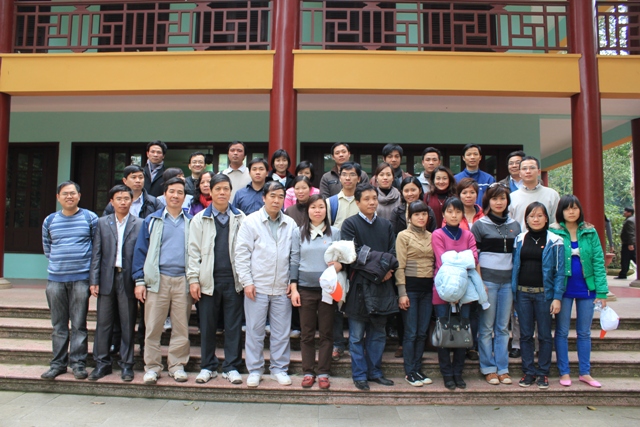
PVU Office Staff - Lecturers visiting the historical relics of President Ho Chi Minh in Ba Chong (Ba Vi-Hanoi)
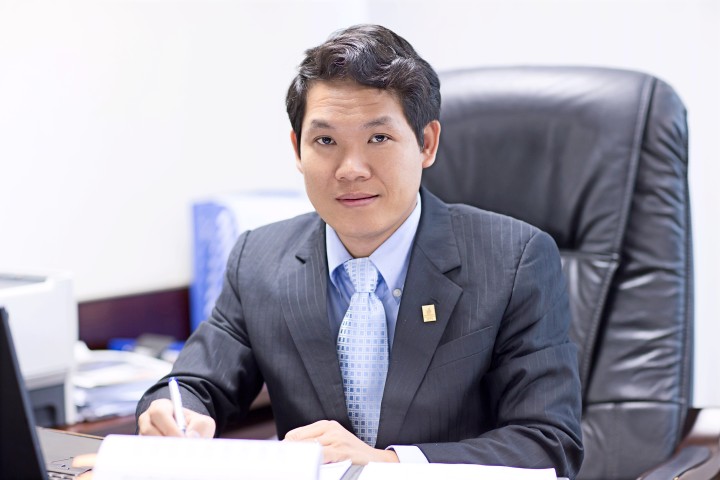
Dr. Phan Minh Quoc Binh
Dr. Nguyen Thanh Tung
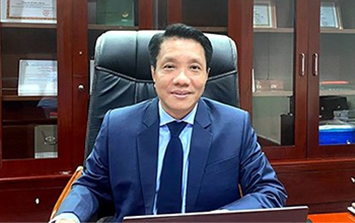
Dr. Le Quoc Phong
UNIVERSITY COUNCIL



Mission and Vision
PetroVietnam University (PVU) specializes in training high-quality human resources, combining training with scientific research and production and business practices in order to contribute to the sustainable development of the Vietnam Oil and Gas Group (PVN) and the Country, conducting social responsibilities and community service.
In the long term, PVU is a multi-disciplinary university, combining with Vietnam Petroleum Institute (VPI) to establish Vietnam Petroleum Academy. Its training majors are career-and-application oriented with high quality, a potential for scientific research at regional and international levels. The university combines training with production and scientific research. It also has extensive and diversified international cooperation, and a competitive capacity for development and integration with a commitment to meet the demands of domestic and international enterprises for human resources.
PVU strives to become one of the prestigious petroleum universities in South East Asia by 2035
Philosopy Of Education
PetroVietnam University philosophy of education focuses on creating 'Talents for Development' of the country and the world. PVU graduates will have talents, revolutionary qualities, patriotism, strong ethics, ambitions, bravery, humility, honesty, diligence, frugality, simplicity and health to be ready to contribute to the country’s progress.
Core values
v Virtue: Accumulated from the act of forging the inner self and living morally as well as bringing sustainable values for life. That is our virtue, proper manner, enthusiasm, aspiration for "the true, the good, and the beautiful".
v Talent: It is expressed through wisdom, knowledge and skills. It means good command of knowledge and skills, inheriting experience to best fulfil tasks; especially in difficult conditions or complicated situations.
v Professionalism: It is expressed through strong work ethics including dynamism, creativity, responsibility and efficiency of the staff and students of the University.
Construction and development of PVU were divided into three stages consistent with the development strategy of the Group as well as the needs of socio-economic development of Vietnam, including:
- Phase I (from 2010 to 2015);
- Phase II (from 2016 to 2025);
- Phase III (from 2026 to 2050)

1. Phase I (2010-2015)
Phase I is the establishment, and construction of infrastructure of the university at the main campus in Ba Ria City, Ba Ria-Vung Tau province. During the time, the University organized the undergraduate petroleum engineering programs; regular short-term training and postgraduate training programs.
In addition to the establishment of facilities, classrooms, the library, laboratories, the University focused on recruiting staff, sending lecturers to study abroad, preparing syllabi, promoting cooperation in training and education with prestigious universities worldwide; collaborating with educational institutions, international universities to set up consultations and apply the results in the university construction project.
During the first years after the establishment, the university opened four undergraduate engineering training programs, namely Petroleum Geology and Geophysics, Petroleum Drilling and Production, Refining and Petrochemicals; organized foreign language training programs and professional development courses.
English language training courses for PVU students are mainly organized in the first academic year so that students can attend subsequent specialized courses with English instruction.
2) Phase II (2016-2025)
At this stage, the university has completed the construction of adequate infrastructure. The university has organized undergraduate and postgraduate petroleum engineering programs and gradually expanded to other high demand fields (such as mechanical engineering, energy, information technology, economic management, the environmental industry, etc.) of the Group and the society.
By 2020, the university will have operated as a multidisciplinary university. Depending on learner needs and the capacity of the university, undergraduate and graduate admissions quota will be up to 1,000 and 200 students/years, respectively.
Research and consulting activities and scientific and technological services are also emphasized. Projects and scientific research will have been carried out to solve the problems based on the demands of the business and society. The construction of petroleum laboratories and laboratories for other areas have been completed to serve the training and research activities of the university.
3) Phase III (2026-2050)
The University will develop the industry according to the needs of learners and society with many new professions. The annual undergraduate, and graduate admissions quota will be about from 1,000 to 1,500, and 400, respectively. There will also be about thousands of learners joining short-term and advanced training courses.
During this period, the university will be put into stable operation. There will be approximately 10,000 students attending formal training courses, short-term training courses, conferences, and symposia.
The stimulated training, scientific research and consulting activities are promoting close cooperation with other research institutes and prestigious universities in and outside the country.
Operation
PVU is a special public university established and funded by Vietnam Oil and Gas Group. The University does not receive financial support from the state budget and collects tuition fees as prescribed for public universities.
The organization of the university is established according to the university model of the advanced enterprise-funded universities in the world. The school employs a high-quality training and education management model in line with MoET's regulations. That is combining learners’ needs with demands from the labor market for human resource. The syllabi are properly designed with the interconnectedness among training levels, and disciplines of credit study programs.
Operation guidelines:
PVU is established and operating under the following guidelines:
1. Career-oriented and application-oriented training
PVU training activities are closely linked with demands from PVN and other enterprises for human resource in particular period and area. A career-oriented and application-oriented curriculum is accordingly developed with active training methods, intensive practice schedule, motivation-increased activities to stimulate students' creativity and foster their passion for learning and researching. The undergraduate curriculum is enhanced with practical, and updated knowledge and vocational skill building activities, ensuring that our newly graduated engineers could perform well at domestic and international oil and gas companies.
2. Combining training with practical production, scientific research, and development of petroleum technology
The research activity- the strategic focus of PVU is considered as a sustainable approach to achieve the goal of developing the university into a prestigious research-training organization in Vietnam and the world.
PVU closely cooperates with technology research centers, and specialized laboratories in PVN's subsidiaries and at universities nationwide and worldwide to facilitate students' consolidation of theoretical knowledge and carry out scientific research. PVU's students have opportunities to join applied research projects during their study. The research topics of our lecturers, scientists, and our students mainly focus on solving practical problems in production and business activities of enterprises in the industry.
The experts who are highly experienced in production activities of the industry, as well as in research are invited to lecture and instruct our students’practice. Practical issues arising production and business process are raised for students to suggest their solutions. Those practices are to foster future talents and contribute to the development of science and technology of the Vietnam Oil and Gas Industry.
3. Applying credit study program, ensuring the interconnectedness among the training levels and with universities nationwide and worldwide
PVU applies the advanced training and management model of the world following MoET's regulations, combining learners' learning needs with the demand for human resources in the labor market. The training program is appropriately designed with the interconnectedness among the training levels and disciplines and is in line with credit study program model.
Regarding teaching and learning methods, PVU is committed to applying advanced teaching methods, employing open educational resources, e-Learning courses and e-textbooks, creating a self-study and learner-centered environment.
PVU selectively adapts and adopts the textbooks and curriculum of prestigious universities in the world. The state of the art library efficiently exploits open educational resources, teaching resources and expertise of oil and gas companies and petroleum technical services. It also helps the university achieve the highest efficiency and quality by cooperating with petroleum organizations, applying modern information technology and telecommunication systems in the management, teaching and learning activities;
4. Developing competency for teaching and administrative staff
PVU's teaching staff recruited from leading cadres in science and technology staff and scientists of the oil and gas industry are invited to lecture and guide students’ practice. Those experts are experienced in professional practice and management and devoted to education with their pedagogical knowledge and advanced teaching methods. At the same time, the university selects and negotiates with prestigious universities nationwide and worldwide to conduct a joint training program, provide and exchange prestigious lecturers. That is to implement the Regulations on attracting high quality human resources issued by the Group and reach the objectives of the university in meeting international standards.
5. Policy on tuition fee, scholarship, remuneration for researcher/tutor
The tuition fee policy of PVU complies with Decree 49/2010 / ND-CP dated May 14, 2010, regulating the policy on collection and use of tuition fees at educational institutions in the national education system.
The university offers scholarships to excellent students, credit loans to students in financial difficulty, ensuring that students have good study conditions. Graduates, Ph.D. students or tutors will be paid at a level commensurate with their contributions.
6. Internationalization and international cooperation
PVU is not only training Vietnamese students but also attracting and training students in Southeast Asia and around the world. The internationalization of the University also shows that PVU graduates will have the opportunity and ability to work for multinational oil and gas companies regionwide and worldwide, and domestic and foreign companies in other areas. The laboratory system for scientific research is established with synchronous and modern equipment. Additionally, the policy to attract experts and scientists will create favorable conditions for scientists in universities and research organizations worldwide to participate in research and technology transfer.
Increasing international cooperation - one of the effective practices for updating intellectual achievements of mankind, can enhance the external force in order to promote the internal resources of the university in training and researching. PVU advocates international cooperation on specific issues such as:
- General consultancy for the establishment of the university, including overall planning, human resource management, operation mechanism, designing curriculum of international standards including textbooks, course content, reference books, consultancy support to build laboratory system and application software, and facility development, etc.
- Training and developing human resources in the university: administrative, teaching, and office staff;
- Cooperating in training with a number of advanced foreign universities, contracting with experts, leading professors of advanced foreign universities / multinational oil and gas companies in the Group to become visiting lecturers. That is to quickly learn the advanced training and technical training experiences of advanced countries. The joint training programs with foreign training institutions are designed in accordance with the characteristics of partners, demands of PVN and the society as well as the capacity of the university;
- Establishing training centers at all levels, research centers, and technology transfer centers
7. Language of instruction and learning
To help students have access to advanced science and technology, learn and absorb advanced learning resources that are mainly transmitted in English, gain knowledge from leading lecturers, and visiting lecturers from foreign countries teaching and transferring technology at PVU, the language of teaching will be English and Vietnamese. From the very beginning, the general education knowledge is taught in English (except for Politics, Social-humanities, Defense Education and Physical Education will be taught in Vietnamese). The school provides English language training for students in their first years to ensure that they can study and do research in English. Graduates from PVU can also work in international companies.
8. Degree and certificate
PVU graduates receive diplomas awarded by PVU; by foreign universities and PVU (on the basis of cooperation in specific agreements with each foreign university and in accordance with MOET regulations) or by foreign universities in accordance with their joint training program with PVU. Graduation and certificate awarding of the university are implemented in accordance with MOET regulations.
9. Outcomes of PVU students
- Ethics: possessing the political, moral, lifestyle and holistic characters of the socialist people; to properly understand the undertakings and policies of the Party and the State; have a professional conscience, sense of discipline, good work ethics and good service attitude; have a sense of responsibility and ambition about the chosen profession;
- The level of thinking: having the ability to think and create, to discover and implement solutions to a practical problem, to argue for the chosen solution in logical and convincing manner; be able to propose new solutions; update the latest knowledge and apply it in work creatively;
- Professional competence: mastering general and specialized education, meeting the requirements of professional education and the ability to study at postgraduate level to meet the requirements of joint training of foreign institutions, capture the practical application of the current field of expertise and future development trends; have knowledge and skills in professional practice; be able to plan, develop solutions and implement a project;
- Ability to work in teams: Know how to rely on collective strength to find a solution to a problem; be able to express the idea clearly, be able to absorb, analyze and synthesize ideas, be able to learn how to suggest ideas to peers, be proficient in using remote teamworking tools.
- Command and leadership capacity: Be able to accumulate collective strength, recognize each person’s strength to assign appropriate tasks, be able to organize and propose short-term and medium-term tactical solutions in order to achieve long-term strategic objectives for organizations and units, have basic knowledge of organization and management;
- Ability to communicate in foreign languages: be fluent in English in communication, study and research, be able to integrate immediately into the learning environment and work abroad using English and for professional activities;
- Communication skills: be able to communicate well, negotiate wisely, talk properly, show culture fit and ethics in all situations;
- Ability to self-study and research: be able to carry out scientific research; be able to develop awareness, be able to self-orient in developing a number of technological issues; be able to self-study, quickly adapt to modern science and technology and apply it effectively in practice;
- Ability to organize life and adapt to the work environment: organize personal life well, be confident, and optimistic in difficult times; integrate rapidly with every living circumstance; adapt to the work environment, take up jobs in the field of specialization which have not yet been taught at the university;
- Ability to undertake work after graduation: After graduation, new graduates are able to undertake tasks at PVN's affiliated companies, and factories which have the trained specialization, companies that provide technical trading services, either as an operator, as a system operator or as a designer, control system improving programmer, or as a technical consultant of the trained specialization.
When it was first established, PetroVietnam University (PVU) was assigned by the Group to use the existing facilities of PetroVietnam ManPower Training College (PVMTC) for training. Meanwhile, a part of Vietnam Petroleum Institute building was used as the provisional campus in Hanoi, and necessary documents for building the headquarters of the University were temporarily being compiled and finalized.
The construction plan of the University was then adjusted for the new conditions. To be specific, since January 1st, 2014, PVU activities have mainly been in Ba Ria city, Ba Ria - Vung Tau province. The project of building PVU's headquarter was accordingly moved from Vinh Phuc to Ba Ria city with a smaller scope. PVN would invest VND 400 billion in the construction of the University with three buildings, namely office and classrooms, dormitories and staff accommodation building.
Office Building and Classroom: Designed and built as a nine-story building with a total floor area of about 10,000 m². All of PVU's classrooms, laboratories, the library and administrative offices are designed with sufficient space for undergraduate and graduate teaching activities and short-term advanced training courses for the Group’s demand.
Dormitory: Beautifully and modernly designed, with a total floor area of over 5000 m², meeting one hundred percent housing needs of PVU students. Besides, cafeteria, self-study room, fitness room and the like will also be built in the dormitory area to ensure a comfortable life for the students.
Staff accommodation building: Designed to include 120 self-contained units with a total floor area of approximately 12,000 m². The building will meet the housing needs of PVU staff.
During the time the construction project is underway, the Group assigns PVU to use the existing facilities of the Petroleum Technical College (PVMTC) in Ba Ria to serve the teaching, management, and research activities, scientific rescue.
Up to now, the office and classrooms of the Project for the Construction of Office and Classrooms, Public Service for Teachers and Student Dormitory have been completed and officially put into use since the beginning of January 2016. Other items of the project will be implemented in the near future.
Office Administrative Area
The administrative office of PVU is located at the 7th, 8th and 9th floors of the 9-storey building to be put into use. The administrative office consists of 15 rooms with a total area of about 2000m² to ensure the operation of the school. The rooms are equipped with modern equipment, meeting the high demand for work and effective management of work.
Classrooms, Lecture Halls
PVU lecture halls comprise of more than 20 classrooms on 3, 4, 5 and 6 new 9-storey buildings with a total area of over 2000m².
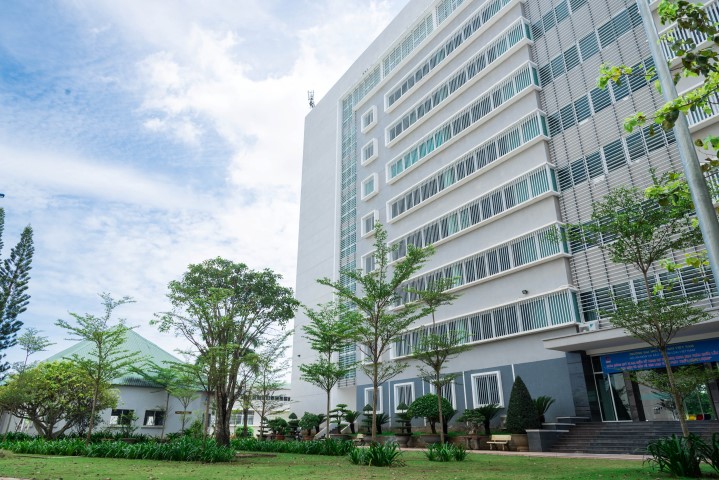
The classrooms are equipped with modern, synchronous sound equipment, projectors ... to well serve the teaching and learning activities of teaching staff and students.
Laboratory area, computer room
The laboratories of PVU are mainly located at 1st, 2nd and 3rd floors with more than 20 laboratories, including general laboratories, technical laboratories and specialized laboratories.
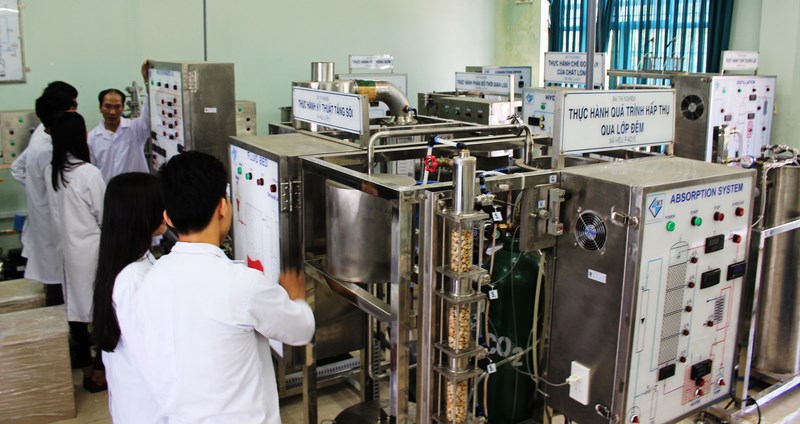
PVU currently operates 4 computer laboratories, including one seventy-computer laboratory mainly used for testing students, two forty-computer E-Learning laboratories, PVU - Schlumberger Mining Center Computer Center, and PVU - Honeywell Training Center automation and control system. In particular, PVU-Schlumberger and PVU-Honeywell centers are equipped with costly specialized software sponsored by foreign partners. These are the best learning conditions that PVU offers to our students so that they can update practical and useful knowledge to facilitate their work performance after graduation.
Library
The library has a total area of 160 m2, is equipped with dedicated desks and chairs to serve the needs of reading documents at the same time for about 60 readers. In addition, the Library is equipped with computers with internet connection, scanner, photocopier to support readers to look up, use available documents.
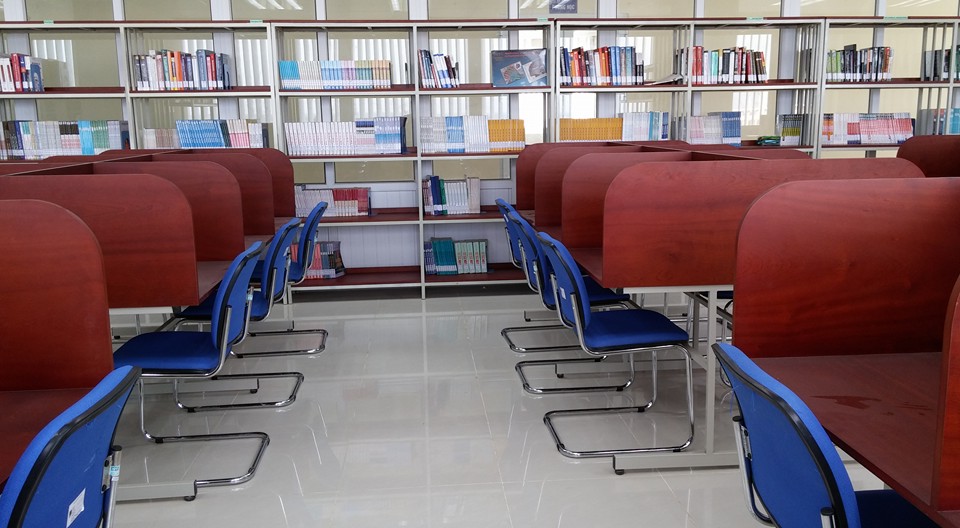
Library resources are diverse, including books, journals, dissertations, dissertations, seminars, workshops, scientific research topics, electronic materials, etc. of the trained specializations of the university.
Books and reference materials
At present, the university library has over 400 titles (2510 volumes) of textbooks and reference materials in Vietnamese; 750 titles (800 books) of English written textbooks and reference books of the training disciplines and textbooks of English courses. At the same time, the library also holds dozens of master dissertations, proceedings of national and international scientific conferences, and scientific research topics at all levels. Besides, the Library has purchased and received a large number of oil and gas magazines published nationally and internationally such as SPE Journals, Oilfield Review (Schlumberger Corporation), and The Petroleum Journal (Vietnam National Oil and Gas Group), etc.
These materials are selected by the university from prestigious universities, and publishers in the oil and gas industry. Every year, the university develops a number of books and magazines following the training scope.
Electronic resources
In addition to the paper resources, students and staff of the university can use the internal electronic resources collected and processed by the university library, including:
- More than 1000 electronic documents have been digitized and can be accessed remotely via the university library portal.
- The library has acquired access to the electronic database of internationally famous publishers such as Springer Link, Science @ Direct, IEEE Xplore Digital Library, Taylor & Francis, etc.
- The library also provides links to free resources of famous universities in the world
Dormitory and sports area
PVU student dormitory is located in a 4-storey building, consisting of 48 rooms, 2 common rooms, canteen areas, gym, etc. The dormitory meets 100% of students' accommodation needs.
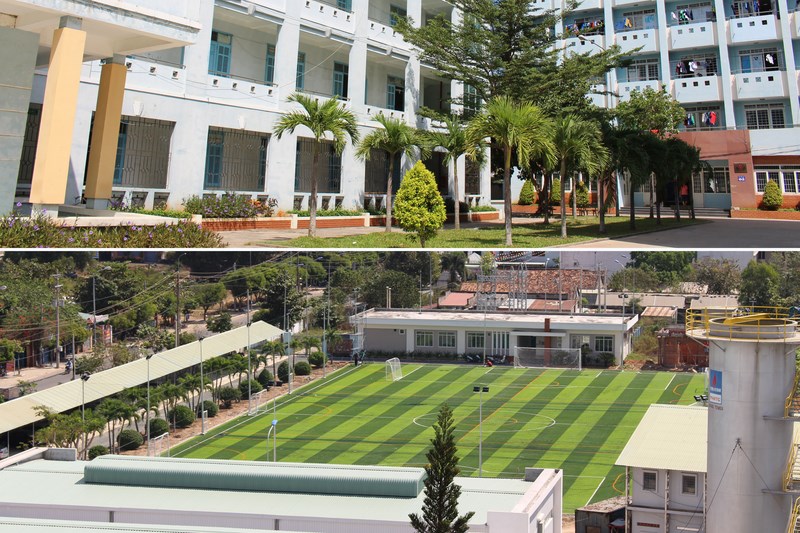
In addition, PVU and PVMTC use a common ground and sports facilities with a total area of 4000 m², such as volleyball courts, football pitches.
Functions:
- Train qualified undergraduate and postgraduate level science and technology, economic and administrative cadres in various disciplines and domains to meet human needs for developing the country.
- Organize scientific research activities and apply science and technology into business and production, with priority given to oil and gas and energy;
- Implement cooperative programs, joint ventures, joint training programs, and scientific research with other training and researching institutions, and production and business organizations nationwide and worldwide;
- Promote learning and dissemination of knowledge through teaching and researching in the fields of science, technology, engineering, management and business, and especially petroleum. Strive to become an internationally influential institution with strong commitment to enterprises and the local;
- Supply high-quality human resources for domestic and overseas projects of the Group, directly contribute to the export of human resources in the petroleum sector.
Missions:
- Provide university and postgraduate training in in-demand majors for the society and the oil and gas industry. In the first phase, the University focuses on training undergraduate and post-graduate level staff in the field of petroleum;
- Organize training courses, seminars and international conference on energy, oil, and gas, management and science and technology to meet the human resource development needs of PVN and the country;
- Research, and deploy science and technology application and management into production and business activities of PVN;
- Provide high-quality human resources for domestic and international oil and gas companies and technical services;
- Perform other duties as assigned by the Group.
On November 25, 2010, the Prime Minister issued Decision No. 2157 / QD-TTG to establish PetroVietnam University (PVU). According to this decision, PVU is a special public university which is funded by Vietnam Oil and Gas Group (PVN) and does not receive support from the state budget. The university mission is to train high-quality human resources, combine training with scientific research and production and business, and contribute to the sustainable development of Vietnam Oil and Gas Industry. PVU is a career-oriented university, striving to become one of the leading universities in Vietnam by 2020, one of the prestigious universities in the region by 2025, in Asia and the world before 2050.
Trading name:
Vietnamese name: Trường Đại học Dầu khí Việt Nam
English name: PetroVietnam University (PVU)
Slogan: PVU - Talents For Development
| Official Logo | Supplement Logo |
 |
 |
Location:
With the goal of building PetroVietnam University is an excellent university with high quality, modern infrastructure, and equipment, supplying high-quality human resources for the sustainable development of the oil and gas industry. The Group has decided to invest in building the main campus in Ba Ria city, Ba Ria - Vung Tau province, the heart of Vietnam Oil and Gas Industry.
Mission and Vision
PetroVietnam University (PVU) specializes in training high-quality human resources, combining training with scientific research and production and business practices in order to contribute to the sustainable development of the Vietnam Oil and Gas Group (PVN) and the Country, conducting social responsibilities and community service.
In the long term, PVU is a multi-disciplinary university, combining with Vietnam Petroleum Institute (VPI) to establish Vietnam Petroleum Academy. Its training majors are career-and-application oriented with high quality, a potential for scientific research at regional and international levels. The university combines training with production and scientific research. It also has extensive and diversified international cooperation, and a competitive capacity for development and integration with a commitment to meet the demands of domestic and international enterprises for human resources.
PVU strives to become one of the prestigious petroleum universities in South East Asia by 2035
Organizations:
- The university council
- Board of Rector
- Science and Training Council
- 05 Functional Offices:
- Organization - Administration
- Academic Affairs
- Planning - Finance
- Equipment & Project Management
- Science and Technology and International Relations
- 02 centers:
- Advanced Training
- Information Technology- Library
- 02 Faculty:
- Fundamental Sciences
- Petroleum.
In the morning of January 27, 2011, the Vietnam Oil and Gas Group (PVN) held a meeting to deploy the tasks in 2011 and announced the decision of the Prime Minister to establish PetroVietnam University. President Nguyen Minh Triet attended and directed the conference.
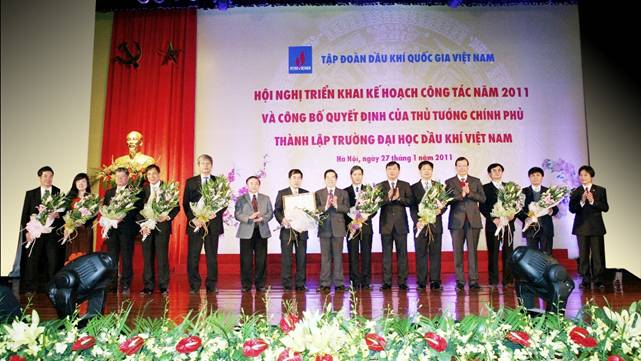
The leaders of PVN, the University Council and the Board of Rectors took a photo with
President Nguyễn Minh Triết at the announcement ceremony of the Prime Minister’s decision on establishing PetroVietnam University.
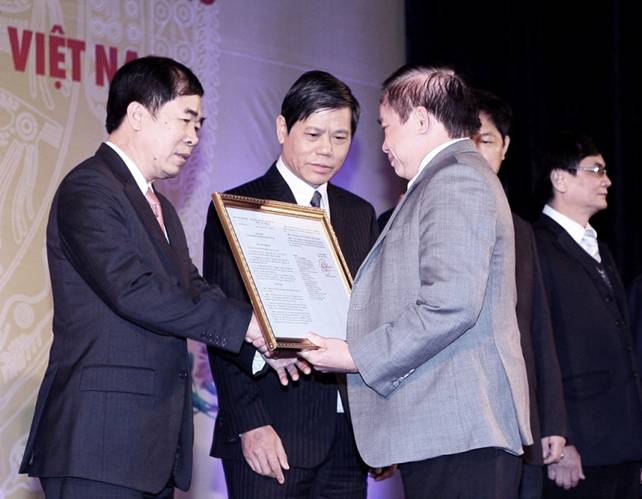
Prof. Dr. Bui Van Ga, Deputy Minister of Education and Training, handed over the decision of the Prime Minister for the university leaders.