



Super User
This section is under construction.
General information
Currently, PVU hold 3 undergraduate programs as:
- Geological Engineering / Petroleum Geophysics
- Petroleum Engineering / Petroleum Drilling and Production
- Chemical Engineering / Refining and Petrochemicals
1. Module details have been designed according to some following main academic orientations:
- Undergraduate studies are regulated by the Ministry of Education and Training. Fundamental and specialized subjects are designed not only to meet the quality requirement of high-ranking American universities but also to fit well in the Vietnamese scenario and the continuity and modernity principles as well.
- Offer career-oriented training programs which first serve the demands of PVN.
- Guarantee continuity of PVU undergraduate programs with other national and international training programs.
2. The number of credits is fixed as regulated in curriculum training issued by the Ministry of Education and Training:
The length of undergraduate program is four years on average, with 20-30% of the duration being spent on laboratory practices and apprentices. The total of credit is more than 150 credits.
3. The language used in teaching and learning is both Vietnamese and English:
Political social subjects, courses on soft skills, natural sciences, fundamental technology, physical training and Military educationare delivered in Vietnamese whereas fundamental and specialized courses are in English.
PVU determines to offer 16 credits of English subjects aiming to equip students with adequate language skills so that they are capable of listening to lectures in English and get IELTS band 5.5 or its equivalent prior to their graduation. All credits of English subjects are delivered within the first two and a half years, together with fundamental subjects.
Four-year training programs are adapted from the counterpart in American universities. They combine professional training with research and practice production in PVN operating units. Such programs which are accredited by ABET extending over 08 main terms and summer terms with the total of more than 150 credits.
4. Continuing professional development courses:
- PVU offers regular short-term continuing professional development courses, namely Induction to Petroleum Geophysics, Petroleum Drilling and Production, and Refining and Petrochemicals.
- Specialized short-term courses are delivered as seminars including Petroleum Geophysics, Petroleum Drilling and Production, and Refining and Petrochemicals.
- Petroleum Geophysics, Petroleum Drilling and Production, Refining and Petrochemicals.
5. Types of Degrees/certificates:
Students who complete four-year undergraduate course are awarded university degrees (Engineer) as regulated by the Ministry of Education and Training.
Those attend continuing professional development courses are awarded certificates verified by PVU.
6. Major education programs and student outcomes:
Module details of 3 major training programs include: Petroleum Geophysics, Drilling and Production, and Refining and Petrochemicals.
Geology Engineering - Petroleum Geophysics
The purpose of Geological Engineering (GE) Program is to produce highly qualified geological engineers with expertise in Petroleum Geophysics.
It is expected that within a few years of graduation Geological Engineering graduates will:
- Be practical, employable and qualified geological engineers in professional careers as practicing petroleum geophysicists engaged in exploration and development activities associated with the production of oil and gas reserves;
- Continue their professional development and become professional managers for enterprises of Vietnam Oil and Gas Group, multinational companies, and/or become scientists for research institutes and universities;
- Keep their education up to date through self-instruction and other training to meet the challenges of the competitive, modern and dynamic workplace.
The student outcomes of our Geological Engineering Program are the same as those required by ABET for any engineering program to receive accreditation. The Geological Engineering graduates will have:
- an ability to identify, formulate, and solve complex engineering problems by applying principles of engineering, science, and mathematics.
- an ability to apply engineering design to produce solutions that meet specified needs with consideration of public health, safety, and welfare, as well as global, cultural, social, environmental, and economic factors.
- an ability to communicate effectively with a range of audiences.
- an ability to recognize ethical and professional responsibilities in engineering situations and make informed judgments, which must consider the impact of engineering solutions in global, economic, environmental, and societal contexts.
- an ability to function effectively on a team whose members together provide leadership, create a collaborative and inclusive environment, establish goals, plan tasks, and meet objectives.
- an ability to develop and conduct appropriate experimentation, analyze and interpret data, and use engineering judgment to draw conclusions.
- an ability to acquire and apply new knowledge as needed, using appropriate learning strategies.
Petroleum Engineering - Drilling and Production
The PE Program prepares students with knowledge and skills so that they can go to work immediately after graduation or continue their higher academic qualifications. We expect our graduates, after a certain time (from 3 to 5 years), can achieve the program educational objectives as follows. Graduates of the Petroleum
Engineering program will:
- Be practical, employable and qualified production engineers, who are capable of designing, executing, producing, researching, innovation and management in specialized field.
- Continue their professional development and become professional managers for enterprises of Vietnam Oil and Gas Group, multinational companies, and/or become scientists for research institutes and universities.
- Keep their education up to date through self-instruction and other training to meet the challenges of the competitive, modern and dynamic workplace.
The student outcomes of our Petroleum Engineering Program are the same as those required by ABET for any engineering program to receive accreditation. The Petroleum Engineering graduates will have:
- an ability to identify, formulate, and solve complex engineering problems by applying principles of engineering, science, and mathematics.
- an ability to apply engineering design to produce solutions that meet specified needs with consideration of public health, safety, and welfare, as well as global, cultural, social, environmental, and economic factors.
- an ability to communicate effectively with a range of audiences.
- an ability to recognize ethical and professional responsibilities in engineering situations and make informed judgments, which must consider the impact of engineering solutions in global, economic, environmental, and societal contexts.
- an ability to function effectively on a team whose members together provide leadership, create a collaborative and inclusive environment, establish goals, plan tasks, and meet objectives.
- an ability to develop and conduct appropriate experimentation, analyze and interpret data, and use engineering judgment to draw conclusions.
- an ability to acquire and apply new knowledge as needed, using appropriate learning strategies.
Chemical Engineering - Refining and Petrochemicals
The Chemical Engineering Program prepares students with knowledge and skills so that they can go to work immediately after graduation or continue their education in graduate programs. We expect our graduates, after a certain time (from 3 to 5 years), can achieve the Program educational objectives as follows:
Graduates of the Chemical Engineering program will:
- Be practical, employable and qualified chemical engineers, who are capable of designing, operating, researching, innovation and management in downstream area of oil and gas industry,
- Continue their professional development and become professional managers for enterprises of Vietnam Oil and Gas Group, multinational companies, and/or become scientists for research institutes and universities,
- Keep their education up to date through self-instruction and other training to meet the challenges of the competitive, modern and dynamic workplace.
The student outcomes of our Chemical Engineering Program are the same as those required by ABET for any engineering program to receive accreditation. The Chemical Engineering graduates will have:
- an ability to identify, formulate, and solve complex engineering problems by applying principles of engineering, science, and mathematics;
- an ability to apply engineering design to produce solutions that meet specified needs with consideration of public health, safety, and welfare, as well as global, cultural, social, environmental, and economic factors;
- an ability to communicate effectively with a range of audiences;
- an ability to recognize ethical and professional responsibilities in engineering situations and make informed judgments, which must consider the impact of engineering solutions in global, economic, environmental, and societal contexts;
- an ability to function effectively on a team whose members together provide leadership, create a collaborative and inclusive environment, establish goals, plan tasks, and meet objectives;
- an ability to develop and conduct appropriate experimentation, analyze and interpret data, and use engineering judgment to draw conclusions;
- an ability to acquire and apply new knowledge as needed, using appropriate learning strategies.
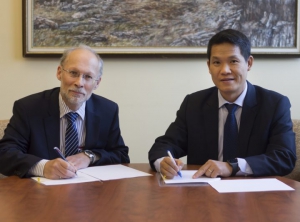
Memorial is strengthening its research and academic connections with Southeast Asia through a new post-secondary partnership.
A memorandum of understanding (MOU) has been signed with PetroVietnam University (PVU). PVU was formed in 2010 to carry out research and development and training for PetroVietnam, the country’s state oil company. The MOU is for five years.

From left: Dr. Neil Bose and Dr. Phan Minh Quoc Binh, rector, PVU, sign the agreement of co-operation on Nov. 8.
According to the MOU, both institutions are seeking ways to develop and carry out collaborative activities.The activities include exchange of faculty members; undergraduate and graduate student mobility and exchange; exchange of publications, research materials, newsletters, etc; joint projects related to research, teaching and faculty development; and development of joint initiatives with partner institutions.
More engagement
On Wednesday, Nov. 8, Dr. Neil Bose, vice-president (research), welcomed a delegation from Vietnam to the St. John’s campus, where he signed an agreement of co-operation between Memorial and PVU.
“PetroVietnam University is interested in expanding its engagement with Memorial University.”
The purpose of the agreement is to facilitate and promote co-operation between both institutions, with each providing graduate training and funding to support qualified students as they pursue their graduate studies at Memorial.
“PetroVietnam University, located in Ba Ria City in the south of Vietnam, east of Ho Chi Minh City, is interested in expanding its engagement with Memorial University, especially to send more graduate students to Newfoundland and Labrador, and to discuss potential joint courses and research projects,” said Dr. Bose.
“Vietnamese universities have been expanding their engagement with Memorial. Last year, several Marine Institute staff attended the International Association of Maritime Universities annual general assembly, which was hosted by Vietnam Maritime University in Haiphong in the north of Vietnam.”

From left: Dr. Ho Trong Long, head, Geology and Geophysics department, PVU; Dr. Le Quoc Phong, head, Academic Affairs Department, PVU;
Dr. Neil Bose; and Dr. Phan Minh Quoc Binh, rector, PVU.
The agreement of co-operation notes that Memorial will provide an annual fellowship — $7,000 for master’s of engineering and $9,000 for doctor of philosophy — for sponsored students entering full-time studies in a graduate degree program at Memorial.
On-campus visit
During their visit, the delegates saw some of Memorial’s world-class research equipment while learning about the university’s diverse teaching and learning opportunities.
They met with Dr. Lesley James, associate professor and Chevron Chair in Petroleum Engineering and acting head, Department of Process Engineering, Faculty of Engineering and Applied Science, visiting her Enhanced Oil Recovery Laboratory in the Bruneau Centre for Research and Innovation.
They also met with Meghan Gamsby, head, Public Services, with the Queen Elizabeth II Library to discuss a library database access exchange, and Dr. Dennis Peters, acting dean, Faculty of Engineering and Applied Science, to discuss Memorial’s engineering program and future collaborations.
Memorial’s Vietnamese graduate students greeted the delegation and hosted them on a tour of the City of St. John’s.
Enhancing internationalization
Memorial’s Strategic Internationalization Plan 2020 sets the stage for a wide range of ambitious international and intercultural initiatives.
The purpose of the plan is to strengthen the university’s internationalization efforts for a wide range of ambitious international and intercultural initiatives.
The university’s Strategic Research Intensity Plan 2014-20 reflects a synergistic and integrated approach for strengthening all aspects of research at Memorial, including scholarship and creative activities, as well as the translation of knowledge into products, practices and policies, and other forms of community engagement.
Vietnamese partnership
Memorial already has connections to Vietnam through a partnership with the Vietnam International Education Development (VIED), under Vietnam’s Ministry of Education and Training.
That agreement supports co-operation between Canada and Vietnam by providing funding support and training to Vietnamese graduate students as they pursue graduate studies at Memorial. VIED fellows admitted as full-time doctoral students at Memorial will be awarded a CDN$5,000 fellowship each year for four years.
Among the delegates from PVU were Dr. Phan Minh Quoc Binh, rector; Dr. Le Quoc Phong, head, Academic Affairs Department; and Dr. Ho Trong Long, head, Geology and Geophysics department, PVU.
Source: www.gazette.mun.ca
Industry 4.0 combines real and virtual technology, automation with intelligent production lines that can create breakthroughs for the Vietnam oil and gas industry, demanding innovative thinking in management and operations that Science and Technology are important tools to ensure the sustainable development of the industry. The PetroVietnam University (PVU) has actively approached a number of industrial applications 4.0, especially in the field of teaching and scientific research. In particular, 3D scanning technology is an indispensable tool in the Building Information Modeling (BIM), which is encouraged by the State to adopt Prime Minister Decision No. 2500/QĐ-TTg dated 22 December 2016. To create conditions for related parties to apply, aiming to save at least 30% of the total conversion expenses from the survey, design, construction to the stage of operation, maintenance and lifting granted throughout the lifetime of the work or factory.
On 15 September 2017, PVU has cooperated with the Star Global Company to organize the seminar "Applying 3D scanning technology in Petroleum field" to introduce to students and visitors to the applications of 3D scanning technology in the field of oil and gas, and the benefits brought against the traditional way.
The seminar began with the introduction about PVU delivered by Dr. Doan Ngoc San, the Dean of the Petroleum Faculty. He emphasized the benefits and contributions of 3D scanning technology to the oil and gas industry.
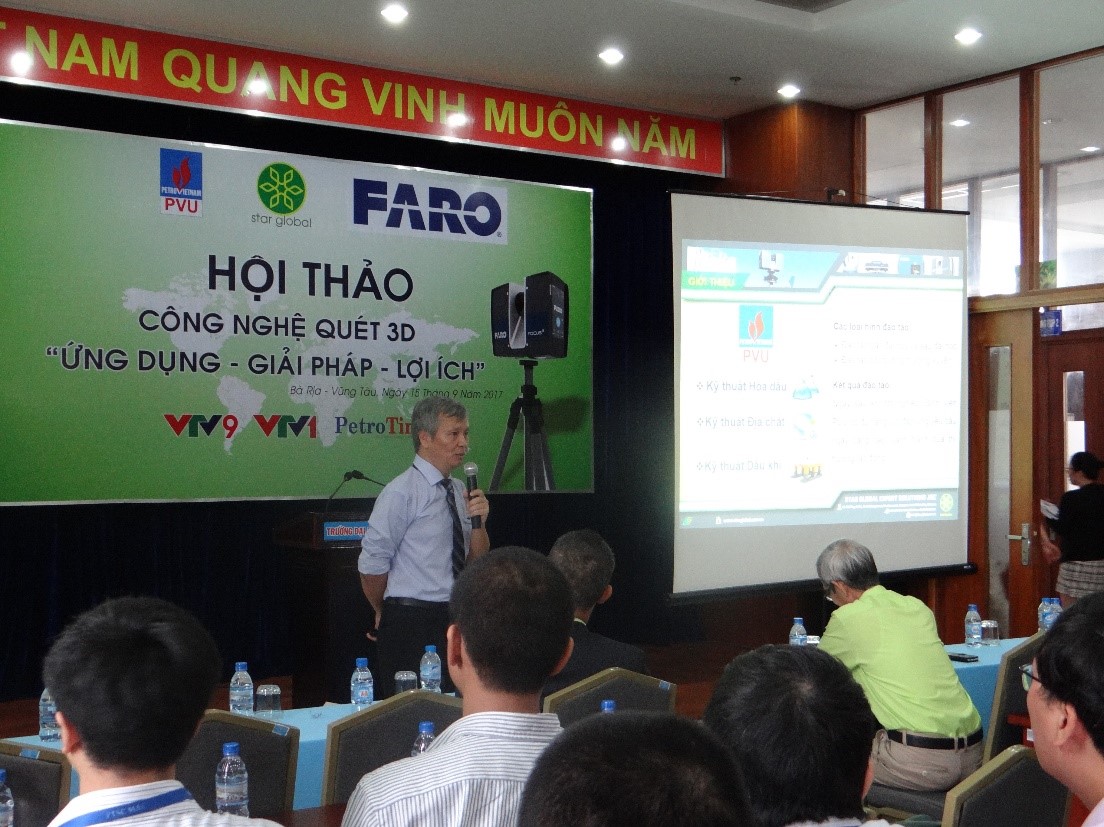
Dr. Doan Ngoc San –Dean of the Petroleum Faculty.
Mr. Tran Duy Hao, The Director of Star Global Company, talked about the benefits of using 3D Laser Scanning technology. The data acquisition speed of 3D scanners can be as high as 1 million points per second and this allows people to scan and reconstruct 3D profiles at a 1: 1 ratio of a plant or building, that faster than conventional measurement and data collection.
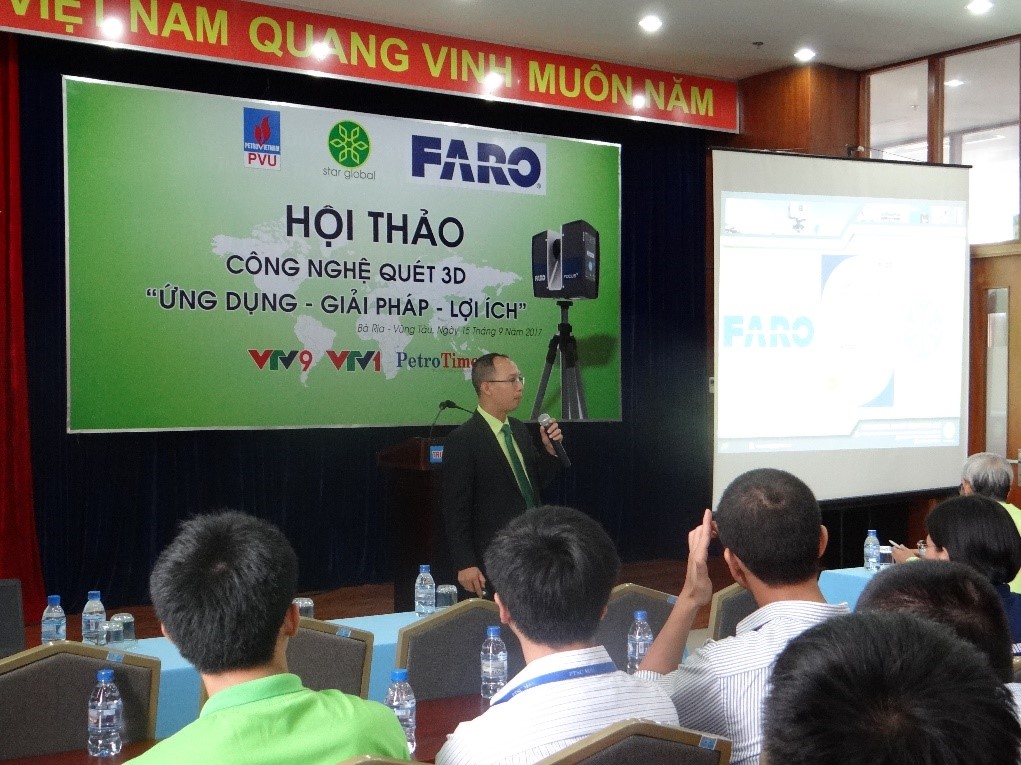
Mr. Tran Duy Hao – Star Global Director.
Within an hour, under the guidance of experts from FARO, students of PVU conducted a real-world demo in the hall and immediately presented the results. The 3D images brought the excitement to all the guests and nearly 200 students in the hall.
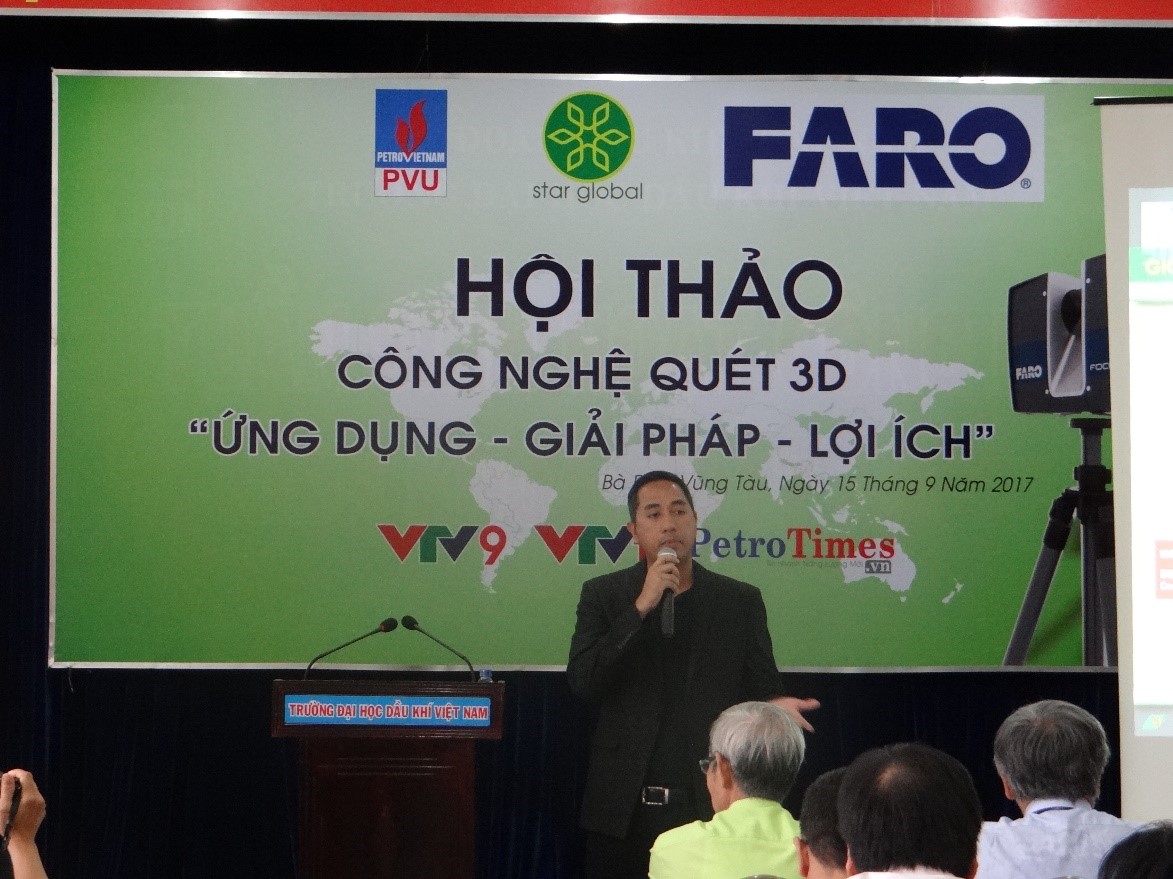
Mr. Ryan Almonte - FARO Technologies Inc.
Before the end of the workshop, there was a 30-minute discussion, which addressed guest’s questions about execution, accuracy, error, and fire safety during 3D usage in Oil and Gas Industry.
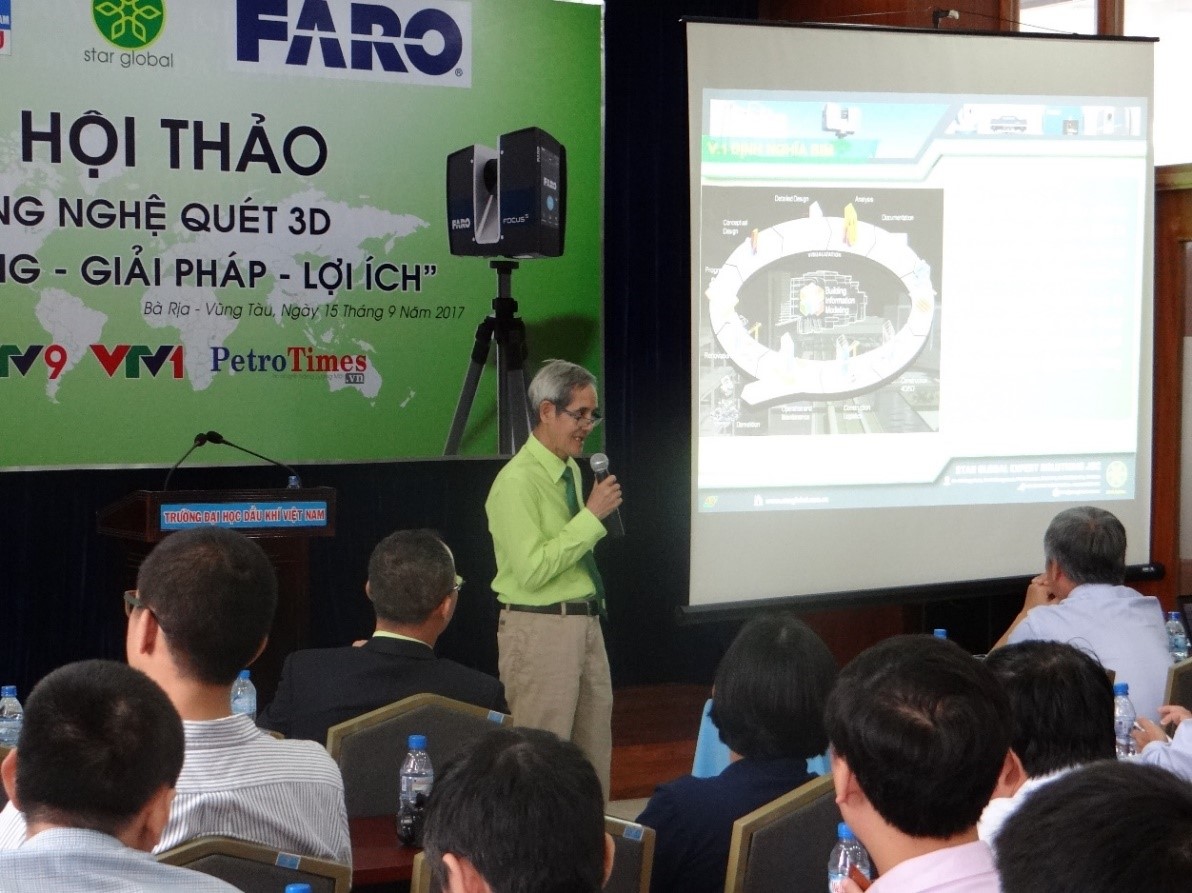
Dr. Le Minh Tuan - Star Global Company, answered the question of PVU’s students.
The seminar was a great success and opened up many opportunities for cooperation between the units in the field of Petroleum applied 3D Technology.
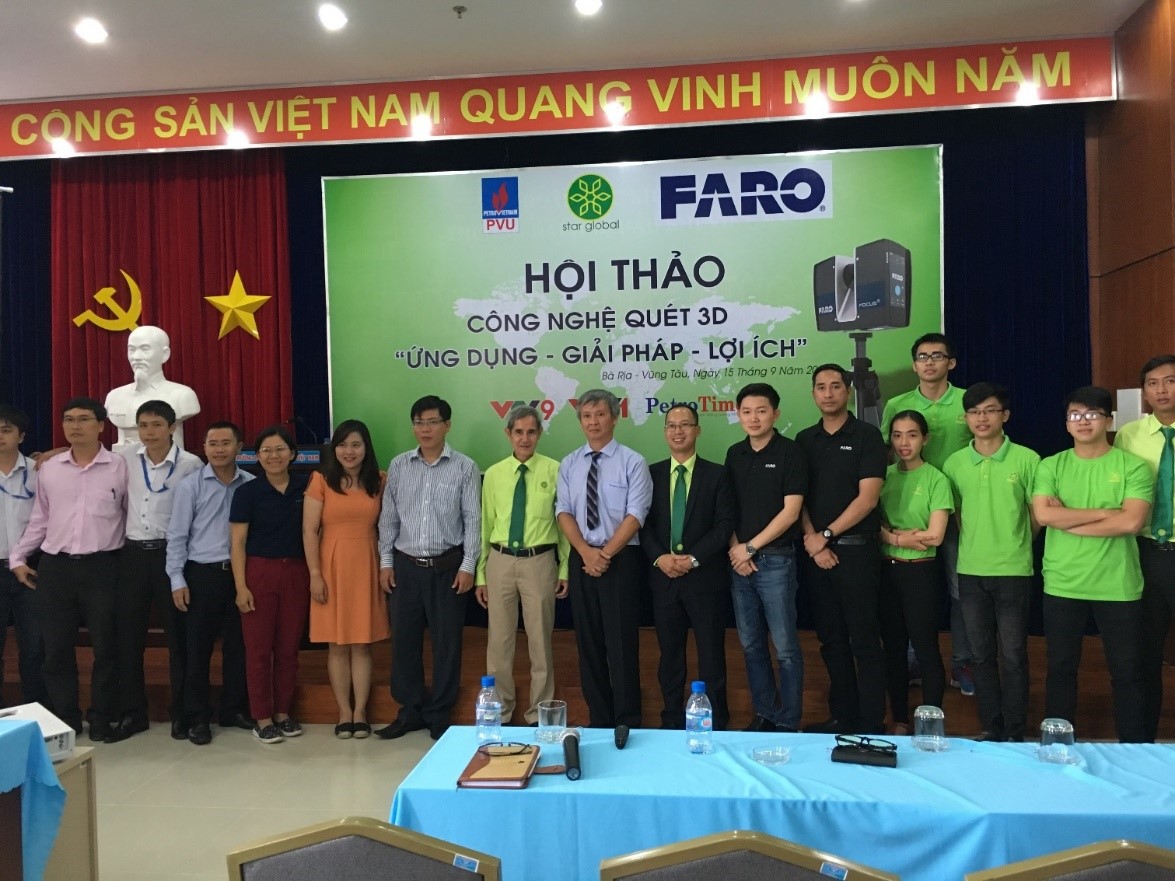
Delegates at the workshop.
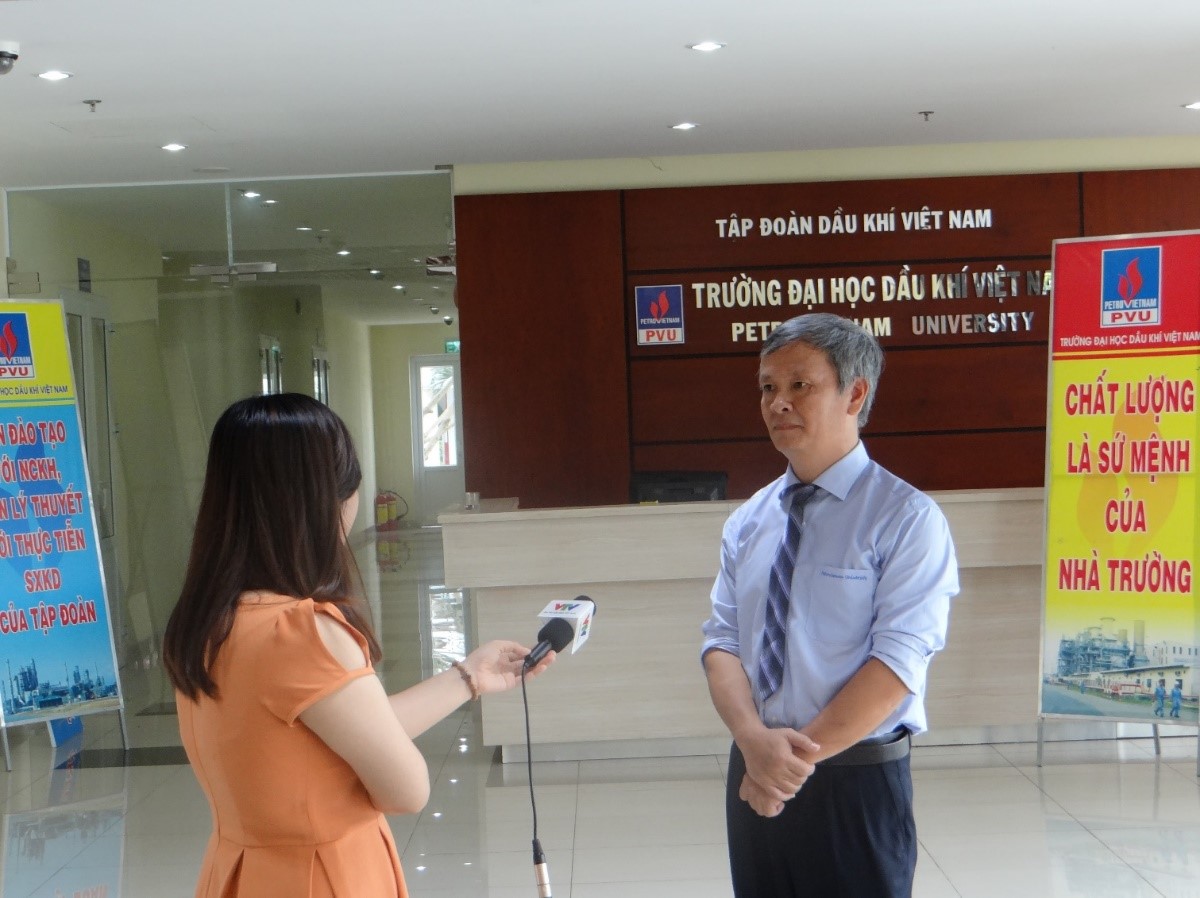
Ph.D. Doan Ngoc San were interviewed.
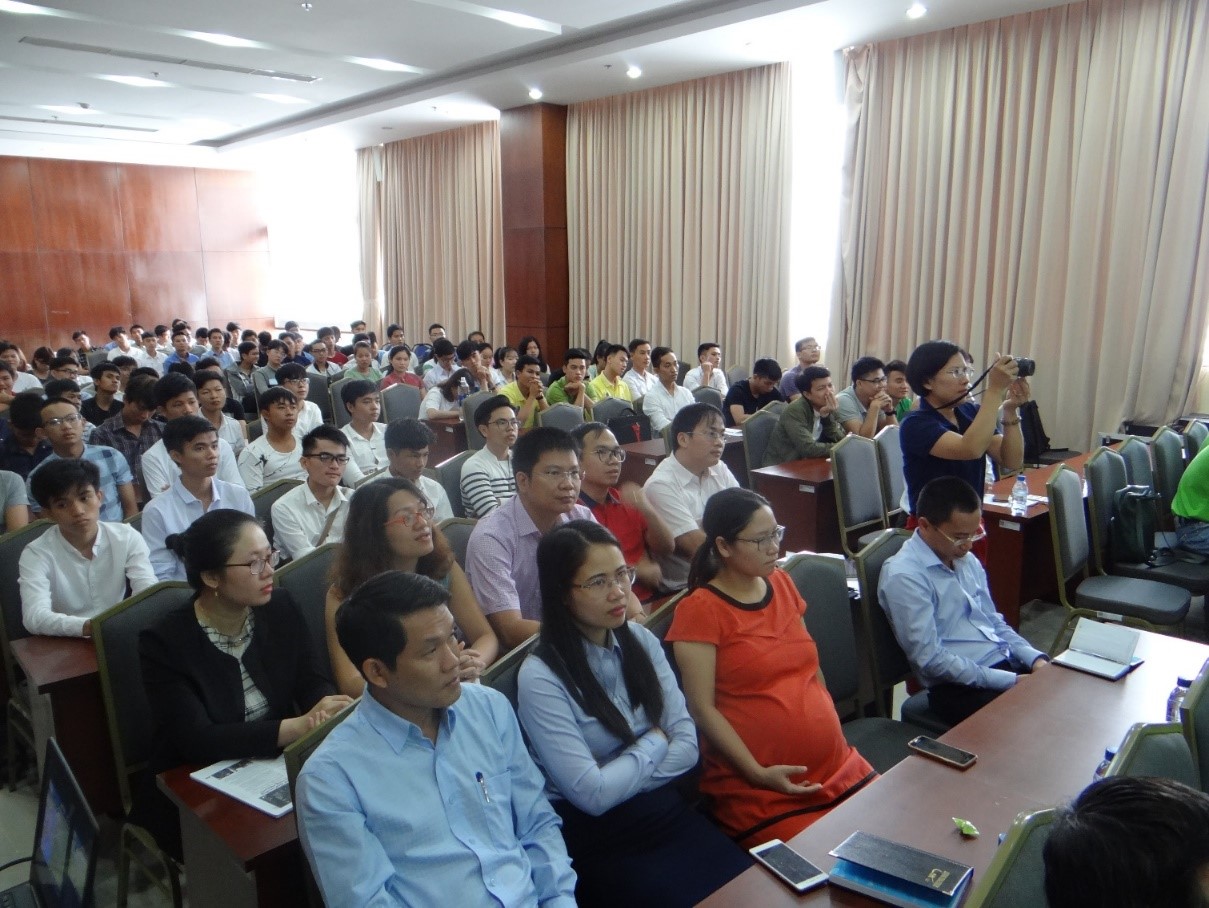
Lecturers and students of PVU participated in the workshop.
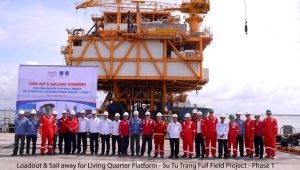
On 5 September 2016, PTSC M&C – EPCI Contractor, in coordination with Cuu Long JOC – the Operator, hosted the ceremony to celebrate the Load out and Sail away for the Topside Module 1 and Module 2 of Production Injection Platform (PIP) of the Su Tu Trang Full Field Development Project Phase 1 (STTFFD-P1) at PTSC M&C fabrication yard.
Attending the ceremony there are Mr. Nguyen Quoc Thap – Vice President of Vietnam Oil and Gas Group (PetroVietnam), Mr. Ngo Huu Hai – President & CEO of PetroVietnam Exploration Production Corporation (PVEP), Mr. Nguyen Van Que – General Manager of Cuu Long JOC, Mr. Phan Thanh Tung – President & CEO of PetroVietnam Technical Services Corporation (PTSC), Mr. Dong Xuan Thang – Director of PTSC M&C and other representatives from the operator, partners, subcontractors and STTFFD-P1 Project Management Team.
After 23 months of execution, the jacket for the PIP, LQ have been successfully installed while the offshore installation activities for PIP topsides, LQ, bridges shall be completed by Sep 2016.

The STTFFD-P1 faced the tight schedule which is only 18 months for the fabrication of 2 platforms with total weight of over 13,000 tones and also tough technical requirements including new technology and equipment applied. Especially, the project proved the great endeavor from both operator and contractors to bring the most optimized plans during the low oil price stage.
Addressing the ceremony, Mr. Nguyen Quoc Thap – Vice President of PetroVietnam, suggests PTSC M&C to keep coordinating closely with Cuu Long JOC and parties to ensure the safety, quality and committed schedule of the project.
The successful of the STTFFD-P1 project loaded-out has further confirmed the solid development and capabilities of PTSC M&C in role of Turn-key EPCIC Contractor for offshore projects and also re-affirms its position, one of the most reputed service providers in Vietnam and the region. This also further tightens the relationship between PTSC M&C CLJOC and through a series of development projects for the Su Tu Field in recent years.
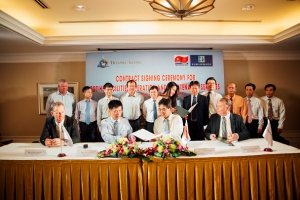
Following H1 and H4 WHPs, Vietsovpetro's Oil & Gas Production Enterprise (OGPE) under the authorization of Vietsovpetro, will continue to be allied with Malaysian Company Bumi Armada Berhad (BAB) to provide O&M service for H5 WHP in TGT oil field of HL JOC.
At the signing ceremony, Mr, Tu Thanh Nghia, Vietsovpetro's General Director gave his speech on behalf of VSP-BAB alliance. He expressed his sincere gratitude to Petrovietnam and PVEP for their support and trust in granting the project to VSP-BAB alliance. Mr. Tu Thanh Nghia also highlighted the achievements that VSP-BAB allaince gained in O&M of TGT field in the past years, particularly, 99,96% of the uptime and 1.5 million hours were reached with non-LTI. Mr. Tu Thanh Nghia undertook his committment to continuously improve the operational efficiency, ensure safety standards, increase quality of the service in order to bring about more benefits to the parties, as well as to strengthen the rellationship between HL JOC and VSP – BAB alliance.
On behalf of HL JOC, Mr. Cu Xuan Bao, the General Director, spoke about his contentment on the O&M service of VSP – BAB alliance in the past years. He highly appreciated the cooperation between VSP and BAB in TGT field development project. He also expressed his hope of the parties' continuous high performance for H5 WHP.
On behalf of Petrovitenam's management, Mr. Doan Dinh Thai, the director of Petrovietnam's Tender Management Division, extended his congratulations on the parties' reaching final agreement, as well as put his emphasis on the significance of H5 WHP's operation in increasing production output of TGT field in particular, and increasing the yearly yield of Petrovietnam in general.
H5 WHP O&M contract has been marked as a milestone in the cooperation between VSP-BAB alliance and HL JOC. It is also a proof of the HLJOC' trust in the quality of service of the VSP-BAB alliance.
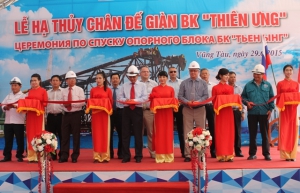
France's oil services company Technip will hand over Vietnam's first ever oil refinery, Dung Quat in the central province of Quang Ngai, to the Vietnam National Oil and Gas Group (PetroVietnam) to operate on May 24, said the refinery's management board.
After the handover, contractor Technip will continue dealing with technical problems and take charge of guarantee and transferring technology to the Dung Quat Oil Refinery's engineers and workers for two years.
After over one year in operation, the refinery processed over 3.7 million tons of crude oil from Bah Ho oilfield in Vung Tau and produced around 3 million tons of petrol, of which 2.8 million tons were sold to the market.
The refinery is planned to process 5 million tons of crude oil to produce 4.75 million tons of petrol, and reach a turnover of VND63 trillion (US$3.3 billion) in 2010.
The 148,000 barrel-a-day refinery started test runs in February 2009 but being shut down with operating problems in August-September and December for checks and equipment replacement.
Once running at full capacity, the refinery is expected to meet a third of Vietnam's fuel demand. The nation currently imports almost all of its oil needs.
Petrovietnam, main investor in the refinery, has planned to increase the capacity of the plant from the current 6.5 million tons a year to 10 million tons.
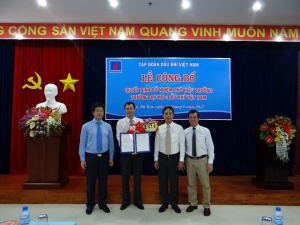
On 2nd June, 2016, in Ba Ria - Vung Tau Province, the leaders of Petro Vietnam (PVN) awarded Decision No. 975/QD-DKVN dated 22nd May, 2017 appointing Dr. Assoc. Prof. Le Van Sy, the current Director of the Advanced Training Center, to hold the position of Vice Rector of PetroVietnam University (PVU) from 1st June, 2017.
In the ceremony, there were Dr. Nguyen Tien Vinh – Member of the Council Member of (PVN), Dr. Nguyen Quynh Lam - Deputy General Director of PVN, Mr. Trinh Dung - Deputy Head of Human Resources of PVN, Dr. Hoang Hung – the Vice Rector of PVU, leaders of PVU’s departments and centers.
At the ceremony, Mr. Trinh Dung – Deputy Head of HR of PVN announced the decision of the General Director of PVN for the appointment of Vice Rector of PVU.
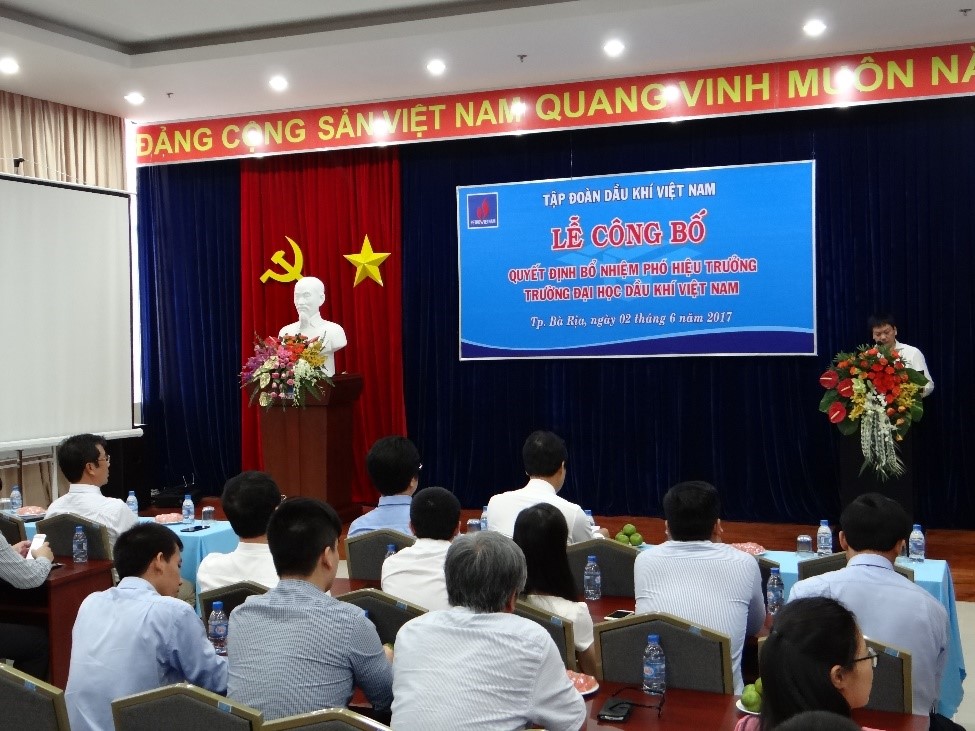
Mr. Trinh Dung announced the decision.

Mr. Nguyen Quynh Lam made a speech at the ceremony.
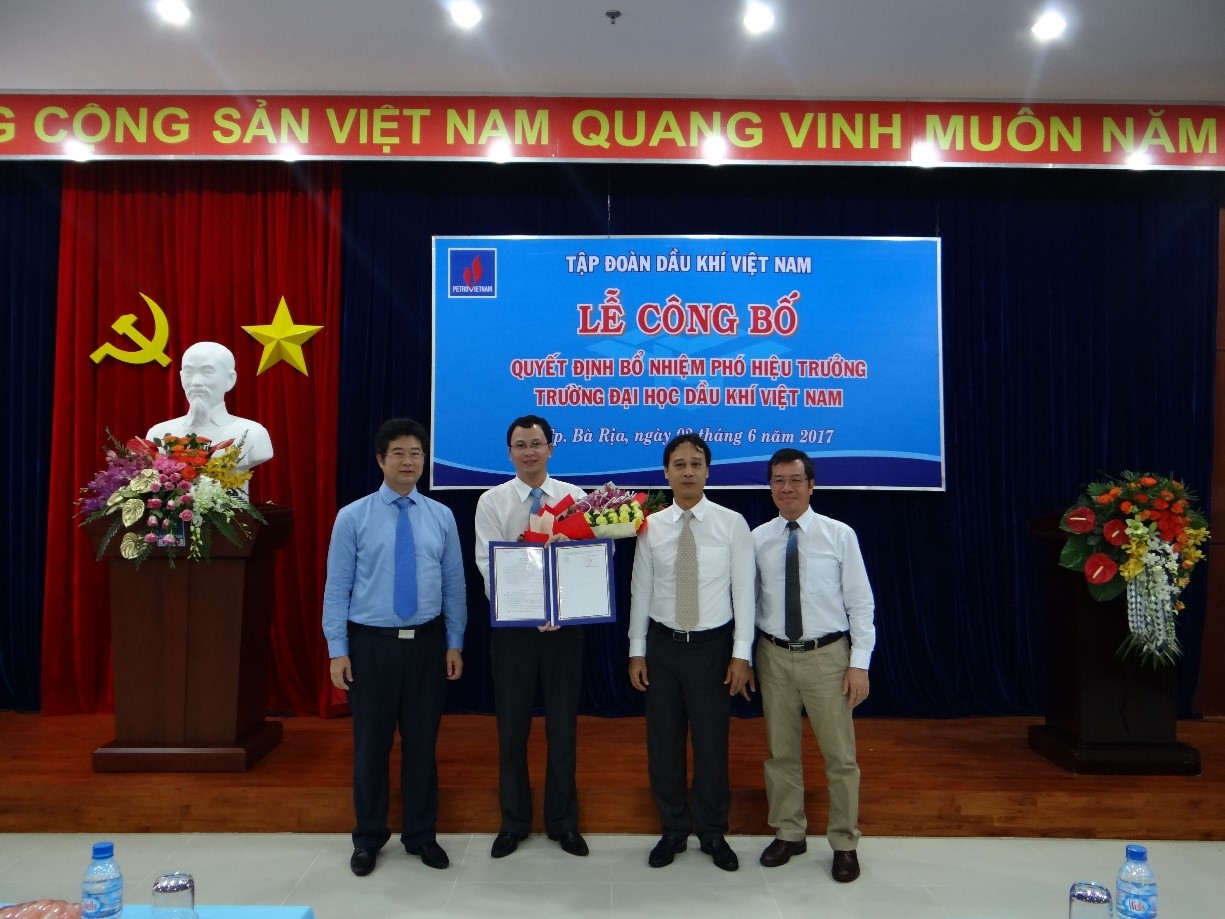
Handing the Decision to Assoc. Prof. Le Van Sy.
Speaking at the ceremony, Dr. Nguyen Quynh Lam - Deputy General Director of PVN congratulated Assoc. Prof. Le Van Sy and strongly believe that Assoc. Prof. Le Van Sy is continuing to succeed in the new position. At the same time, leaders of PVN requested the leaders and lecturers of PVU to promote the results achieved; unite overcoming difficulties and challenges; strengthen the training and research, contributing to the development of high quality human resources for the Vietnam Oil and Gas Industry.
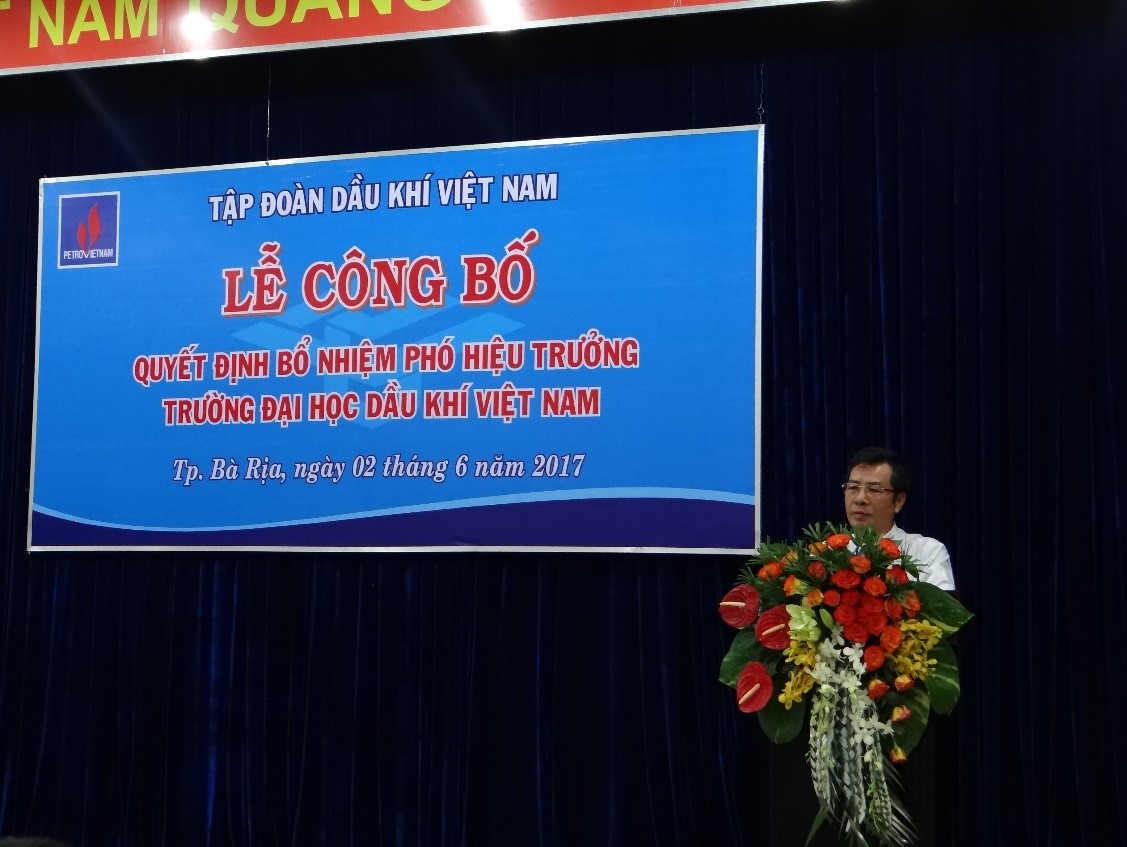
Dr. Hoang Hung – Vice Rector of PVU
On behalf of PVU's Board of Rector, Vice-Rector Hoang Hung congratulated and expressed his confidence to Assoc. Prof. Le Van Sy to fulfill his responsibilities in the new position.
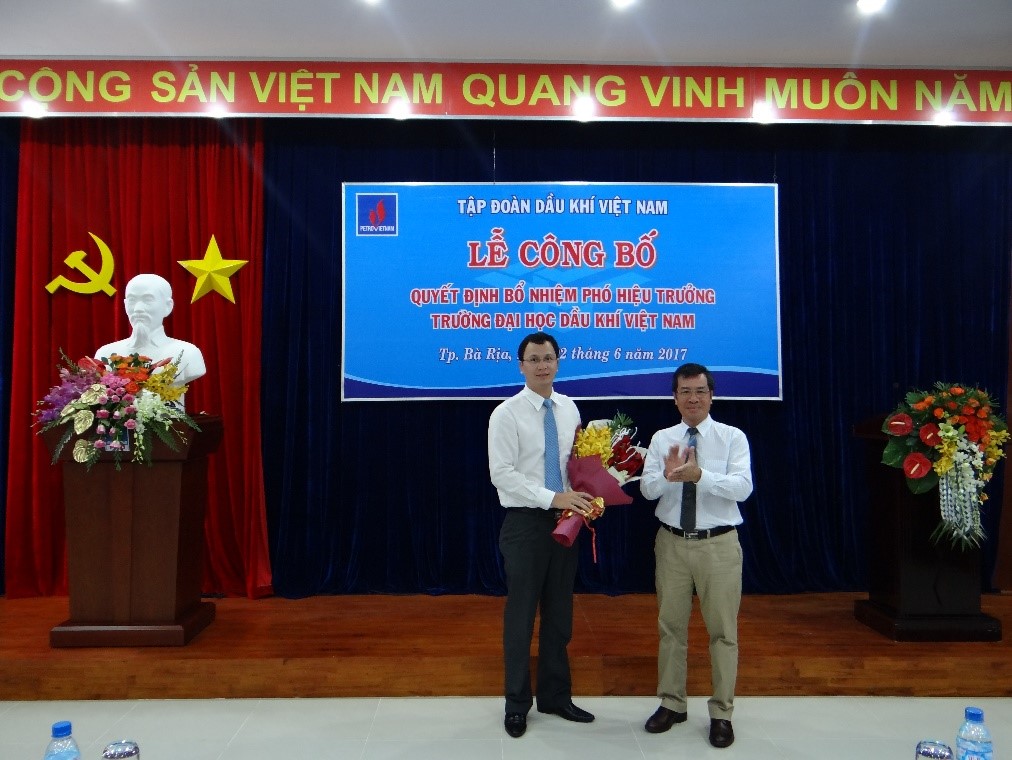
Ph.D. Hoang Hung gave flowers and congratulated Assoc.Prof. Le Van Sy.
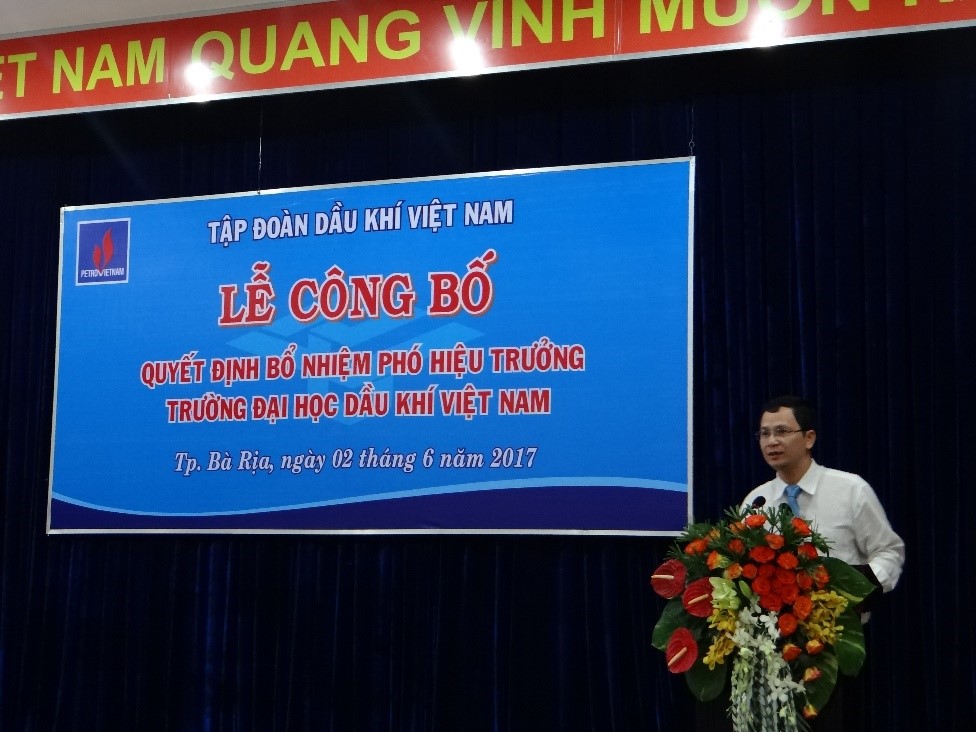
Assoc. Prof. Le Van Sy, The new Vice Rector had speaking at ceremony.
Speaking at the ceremony, the new Vice Rector, Assoc. Prof. Le Van Sy thanked the leaders of PVN and leaders and staff of PVU, has entrusted a great new responsibility and affirmed efforts will be made, with the staffs and lecturers of PVU bring into play the strength of solidarity to train high quality students; different with the other university in oil and gas industry; meet the developed needs of the Group; and It is also effective in combining training with scientific research and practical application of the Group, well accomplishing the strategic objectives of the Petro Vietnam.
The development of a high quality teaching staff is very significant and crucial to the development of PetroVietnam University (PVU) in the future, in line with the development orientation that the PetroVietnam (PVN) set out.
With that in mind, in addition to solid professional knowledge, teaching staff must be proficient in pedagogical skills and teaching methods. Recognizing the importance of this, the Board of Rector of PVU has assigned the Advanced Training Center (ATC) to organize a course on "Teaching Methods & Skills for Lecturer" on 23rd and 24th May, 2017 at PVU campus.
The course is held in the big hall of PVU, Dr. Tong Xuan Tam (Ho Chi Minh City Pedagogy University) teaches directly. With extensive knowledge and hands-on experience, he has made the content of the teaching method more lively and understandable. The course is highly appreciated because of the practical content contributing to solving the problems in the teaching of the lecturers. Besides theoretical content, the course also devotes a large part of time to the trainees to practice, through which they can comment and learn from each other to help improve teaching skills.
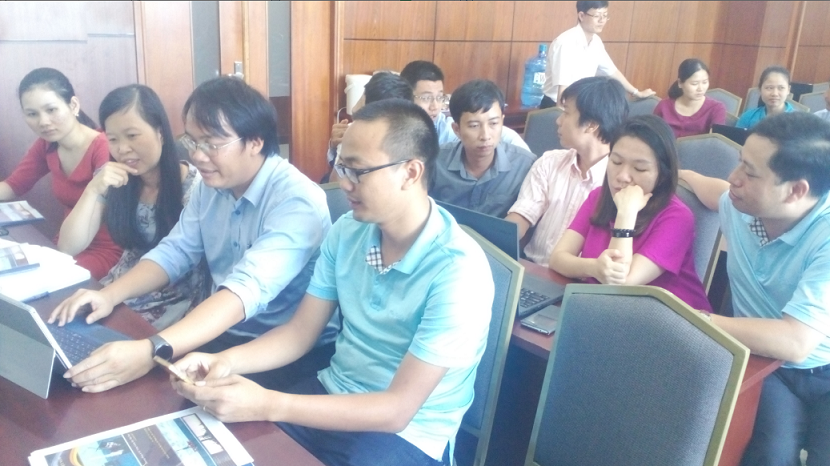
The groups discussing the preparation of the teaching practice.
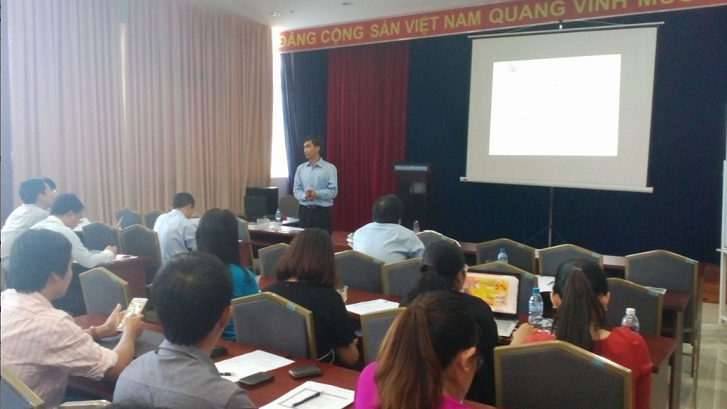
MSc. Dinh Quang Sang, lecturer of Petroleum Faculty practiced the lecture.
According to Ph.D. Tong Xuan Tam, the training program has been successfully completed and the lecturers of PVU have been able to gain an insight into the valuable and useful training programs of applying to practical teaching.
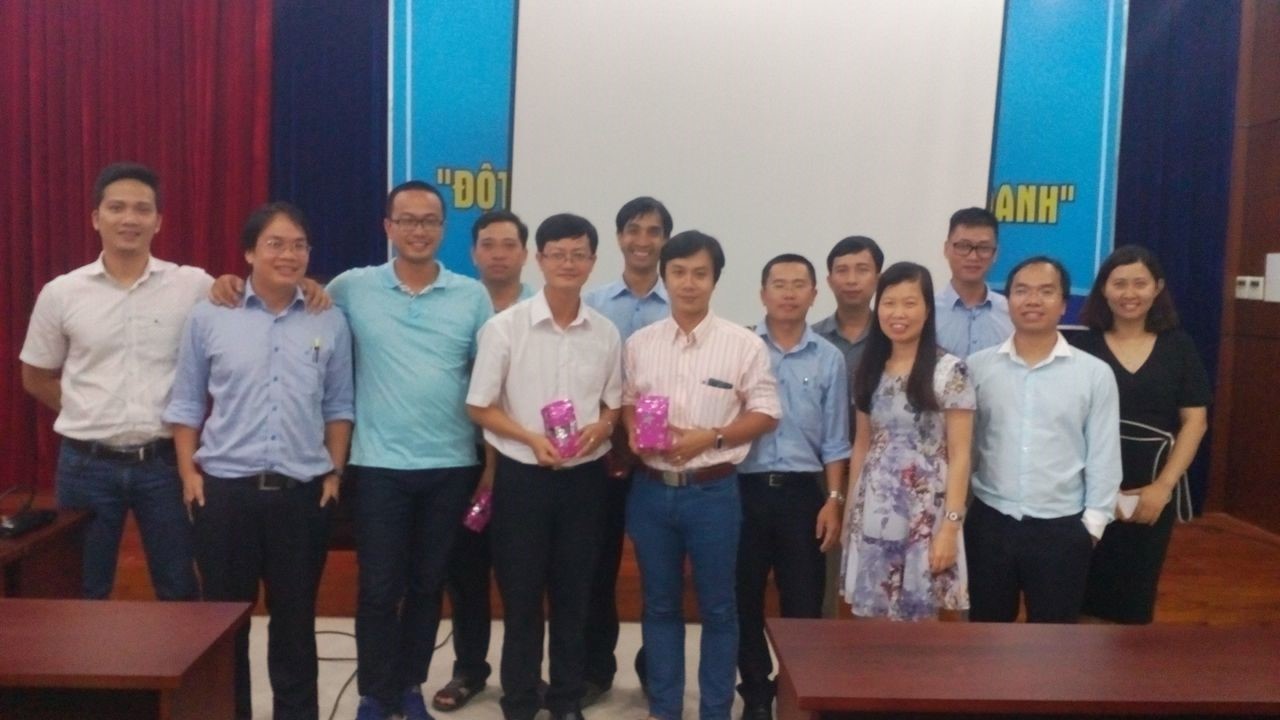
Participants and instructor of the course.
Industry 4.0 combines real and virtual technology, automation with intelligent production lines that can create breakthroughs for the Vietnam oil and gas industry, demanding innovative thinking in management and operations that Science and Technology are important tools to ensure the sustainable development of the industry. The PetroVietnam University (PVU) has actively approached a number of industrial applications 4.0, especially in the field of teaching and scientific research. In particular, 3D scanning technology is an indispensable tool in the Building Information Modeling (BIM), which is encouraged by the State to adopt Prime Minister Decision No. 2500/QĐ-TTg dated 22 December 2016. To create conditions for related parties to apply, aiming to save at least 30% of the total conversion expenses from the survey, design, construction to the stage of operation, maintenance and lifting granted throughout the lifetime of the work or factory.
On 15 September 2017, PVU has cooperated with the Star Global Company to organize the seminar "Applying 3D scanning technology in Petroleum field" to introduce to students and visitors to the applications of 3D scanning technology in the field of oil and gas, and the benefits brought against the traditional way.
The seminar began with the introduction about PVU delivered by Dr. Doan Ngoc San, the Dean of the Petroleum Faculty. He emphasized the benefits and contributions of 3D scanning technology to the oil and gas industry.
Dr. Doan Ngoc San –Dean of the Petroleum Faculty.
Mr. Tran Duy Hao, The Director of Star Global Company, talked about the benefits of using 3D Laser Scanning technology. The data acquisition speed of 3D scanners can be as high as 1 million points per second and this allows people to scan and reconstruct 3D profiles at a 1: 1 ratio of a plant or building, that faster than conventional measurement and data collection.
Mr. Tran Duy Hao – Star Global Director.
Within an hour, under the guidance of experts from FARO, students of PVU conducted a real-world demo in the hall and immediately presented the results. The 3D images brought the excitement to all the guests and nearly 200 students in the hall.
Mr. Ryan Almonte - FARO Technologies Inc.
Before the end of the workshop, there was a 30-minute discussion, which addressed guest’s questions about execution, accuracy, error, and fire safety during 3D usage in Oil and Gas Industry.
Dr. Le Minh Tuan - Star Global Company, answered the question of PVU’s students.
The seminar was a great success and opened up many opportunities for cooperation between the units in the field of Petroleum applied 3D Technology.
Delegates at the workshop.
Ph.D. Doan Ngoc San were interviewed.
Lecturers and students of PVU participated in the workshop.